For parents of kids with IEPs
"This is my life. It's not what I thought I'd be doing."
Have you said that?
It can show up in moments like these:
You've cried before, during, or after an IEP meeting, and you're tired of that being normal.
You've said exactly what your child needs in that meeting, watched them nod, and watched nothing change.
You've sat in that meeting knowing your child better than anyone else at the table, and it still didn't seem to matter.
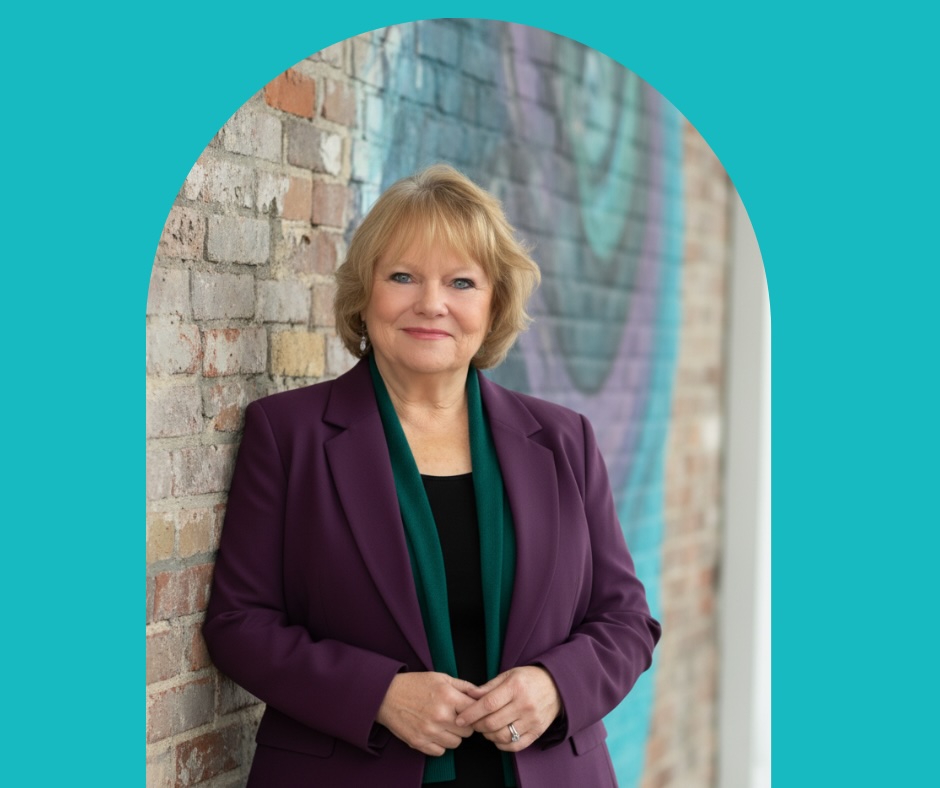
Charmaine Thaner, M.A.
What You’re Up Against
And Why You May Be So Tired
You talk about your child’s strengths.
You explain what works.
You describe what school could look like for your child.
And then the IEP arrives, and it doesn’t say any of that.
You've been told you're an equal member of the team. Never treated like an equal member.
So exhausted every day, making sure they follow through.
Always second-guessing if you're asking too much.
You were never shown how to connect your child's strengths to the actual sections of the IEP, the part that builds inclusion from the beginning of the document.
You were never handed the training.The system was built this way. That says nothing about you.
Here's where that connection either happens, or doesn't.
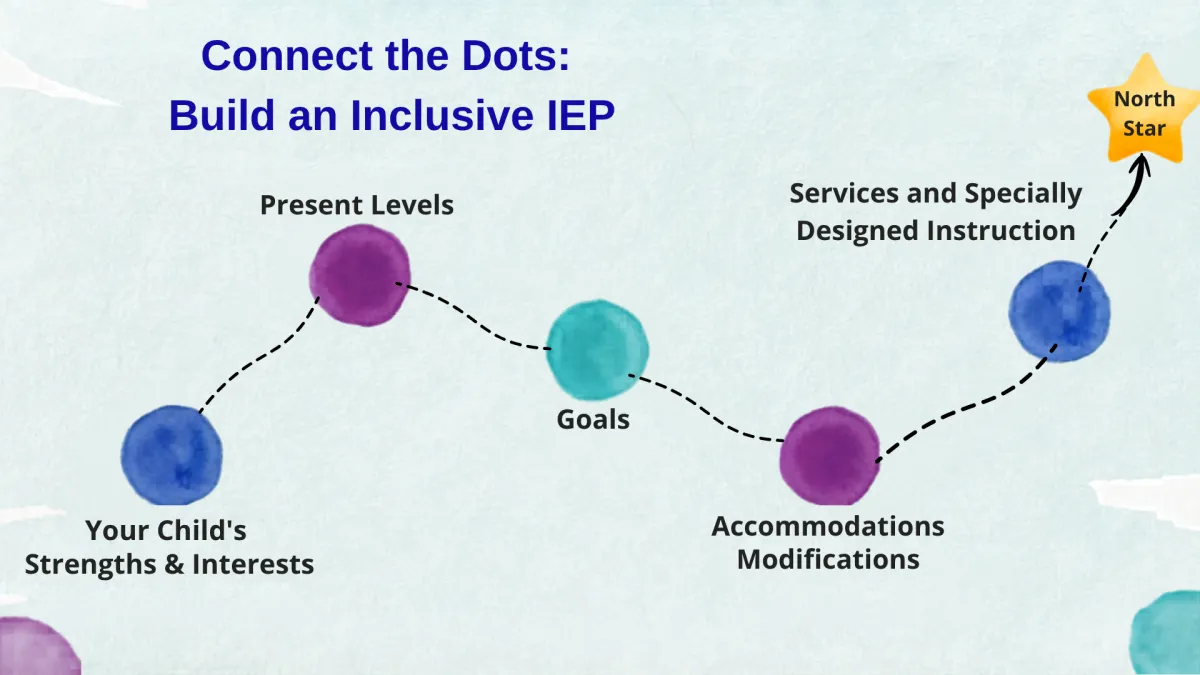
This Is What It Looks Like When the Dots Connect...

Your child is visible in the IEP.
You open your child's IEP and see your child in it: a real picture of who they are and how they learn, so you walk into that meeting knowing exactly what to say.

Their strengths drive the plan.
Their strengths are connected to the goals, to what teachers expect.
The dots connect from who your child is to what they're working toward.

Getting help doesn't mean leaving class.
Because the IEP specifies that support happens inside the general education classroom, so your child never has to choose between getting help and staying with their peers.

No more fighting for the same thing every year.
Inclusion is woven through your child's IEP. It's already written into the plan, so this year's meeting starts where last year's ended.

Inclusion starts on page one.
Inclusion is built in from page one. So you walk into that meeting ready to move things forward, because it was already written in.

Belonging is your child's starting point.
Learning with classmates every day is the starting point. The plan gets built knowing your child belongs, so you walk in free of proving anything.


Hi there, I'm Charmaine
The parent in this room and the educator in this room are the same person. That's not common. And it changes everything about how I read an IEP.
I’m Charmaine Thaner, an advocate, retired special and general education teacher who included students, and the parent of an adult son with Down syndrome.
I’ve sat on many sides of the IEP table.
As a parent, I know how hard it is when you speak up, explain what your child needs, and still end up with an IEP that does not reflect what you said.
As an educator with more than 30 years in schools, I know how IEPs are written, how decisions are made, and how easily inclusion can get ignored.
I look at the parts of your child's IEP that shape their actual school day, what's supporting inclusion, what's quietly getting in the way, and what to ask for next.
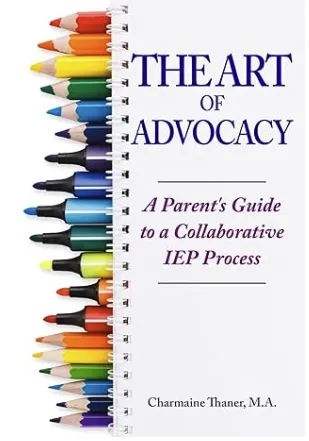
The Art of Advocacy: A Parent's Guide to a Collaborative IEP Process is my book for parents who want to ask better questions, push back with confidence, and stop leaving IEP meetings feeling unheard.
I've spoken at national conferences, been featured on national podcasts.





Inclusive IEP Audit™
Other IEP Reviews Check Compliance.
This One Checks Connection.
Your child's IEP has a lot of pages. But not every page determines whether inclusion happens
The Inclusive IEP Audit™ goes straight to the sections that do.
Together, we look at the parts of the IEP that decide whether your child belongs or gets moved to the edges.
Present Levels
Whether your child's strengths are specific enough to actually shape the plan, so the team knows how to reach your child
Whether needs are written to open doors, so your child is described as a capable learner who belongs in that classroom.
Whether your voice is in the IEP so the people making decisions about your child actually know who they are
Goals
Whether the goals connect back to your child's strengths, so they are building on what your child already does well.
Whether they point toward something real, so your child is working toward belonging
Accommodations
Whether they are clear and specific enough to use every day, so your child's teacher knows exactly what support to put in place every single day
Whether they keep your child learning alongside their general education classmates, your child is part of the room.
Service Grid, Specially Designed Instruction & LRE
What support your child is getting, who is providing it, and where it happens, because a service delivered outside the classroom is a reason your child misses what everyone else is doing
Whether the supports are designed to remove barriers inside the classroom, so your child can participate, connect, and belong where every other child belongs
Who This Is Made For,
And Who It Isn't
This IS for you If...
You believe inclusion is your child's right and you want an IEP that reflects that, so that your child is not depending on whoever happens to be in the room that day to make it happen
You are done accepting vague language and leaving meetings without knowing what comes next, so that you stop walking out of those meetings wondering if you said enough
You want clarity on what matters most right now, so that your energy goes toward the changes that will actually make a difference for your child this school year
This is NOT for you if...
You need a full IEP rewrite. I offer 1:1 Advocacy support for families who are ready for that level of work
You are preparing for due process, this audit focuses on what you can do before it reaches that point
You are looking for a generic checklist. This is built around your child, your school, and your specific situation, not a one-size-fits-all answer
Does This Sound Like You...
You were never handed a permission slip to speak up in that room. So you deferred. You nodded. You signed. And you left wondering if what was written would actually protect your child's place in the classroom.
You knew something was off, you just did not have the language to name it in the moment.
You want more knowledge because you already understand what more knowledge means, it means more power to shape what happens for your child.
That power starts now.
If you are nodding, this is for you.
What's Included In Your Inclusive IEP Audit™
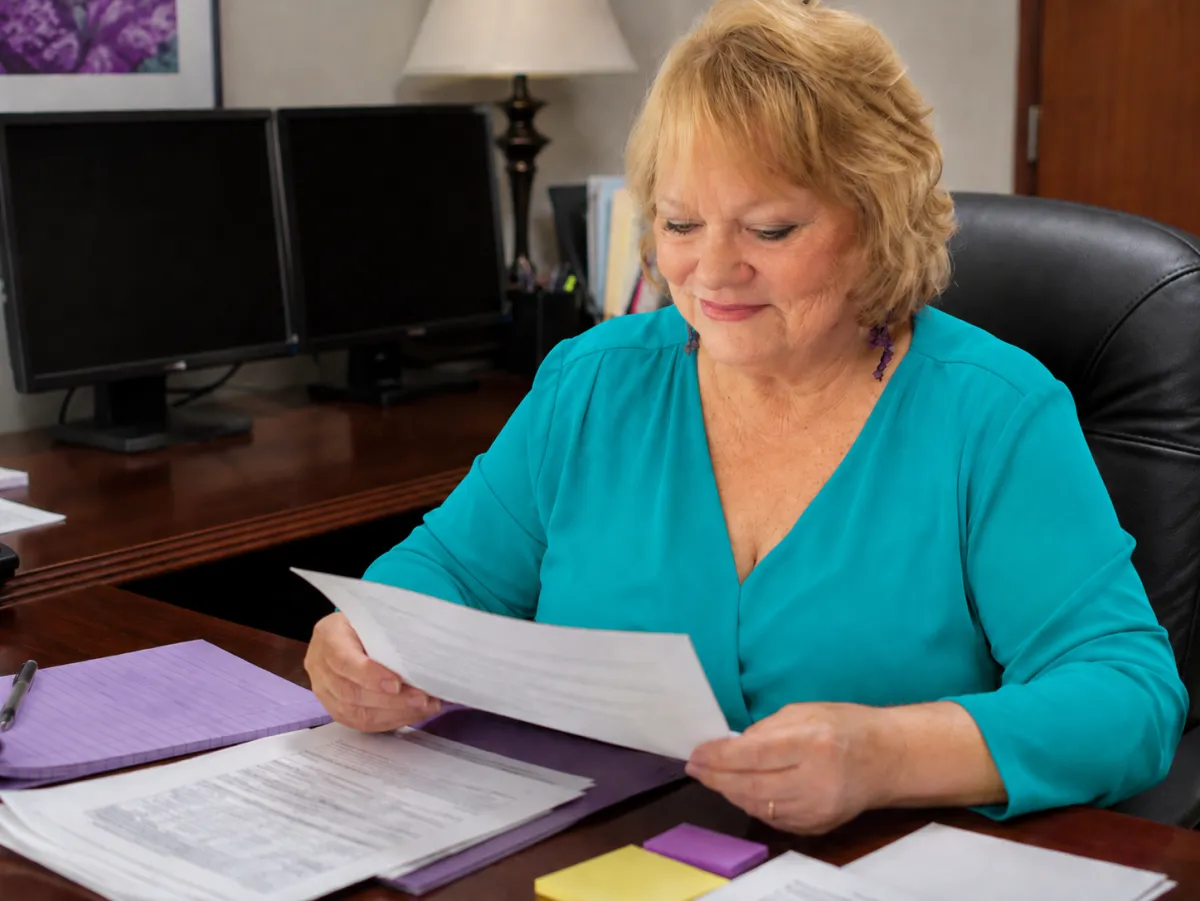
Thoughtful Pre-Work
Before we meet, you'll complete a short intake form and send your child's current IEP.
I do the heavy lifting first. I review Present Levels, one or two priority goals, accommodations, and the Service Grid/LRE, the sections that decide whether inclusion is built into the plan or left out of it, so our time together is spent on clarity.
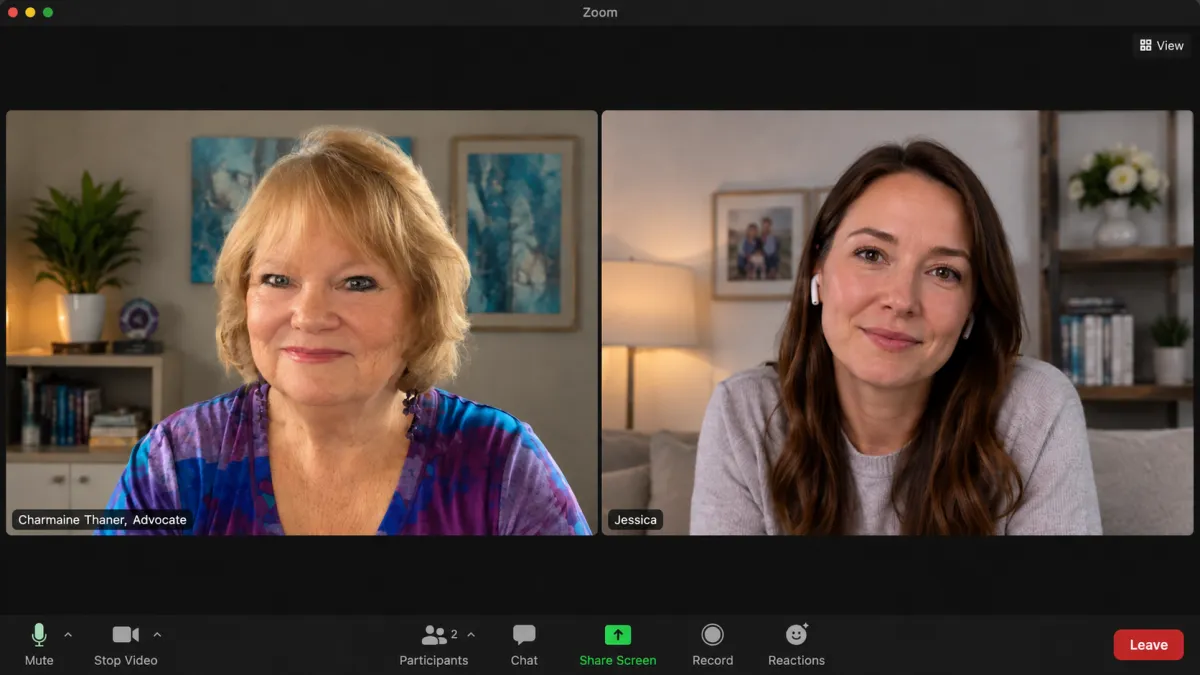
Live Inclusive IEP Audit™ on Zoom.
This is where everything comes together.
We walk through the key sections of your child's IEP together, both of us looking at the same document together so you can see exactly what it is saying, what it is missing, and what it means for your child's place in the classroom.
I'll show you where the dots connect and where they don't. You'll pause when something lands. You'll add context about what's really happening at school, because the IEP doesn't tell the whole story, and what you know about your child is just as important as what is written on those pages.
This is a conversation built around your child, so you leave knowing exactly what to focus on and exactly what to say.

This is Me!
Your child is one of a kind, and the tools you use to advocate for them need to reflect that.
This custom AI tool I built for you walks you through describing your child's strengths, learning style, communication, and needs in your own words, then transforms everything you share into a strengths-based learner profile and copy-ready language for key IEP sections.
Real advocacy starts with your child being understood. This tool makes sure they are.
The Inclusive IEP Audit™ Clarity Guarantee
Within five business days of your session, you’ll receive a written plan showing what the reviewed sections of your child’s IEP are really saying, the biggest inclusion gaps we identified, what needs attention first, and specific language you can bring to the team.
You’ll also receive three clear next steps, so you know exactly where to begin.
If anything in your plan is unclear, contact me within seven days and you’ll receive one complimentary 30-minute clarification call covering the findings, suggested language, and next steps included in your audit.
I can’t guarantee how the school will respond, but I can guarantee you won’t be left wondering what to do next.

Recording + Transcript
After our session you'll receive the full recording and transcript, so everything we uncovered together stays with you, and you can come back to it before every IEP meeting, every email to the school, every time you need to remember exactly what to ask for.
Inclusion Next Steps Plan
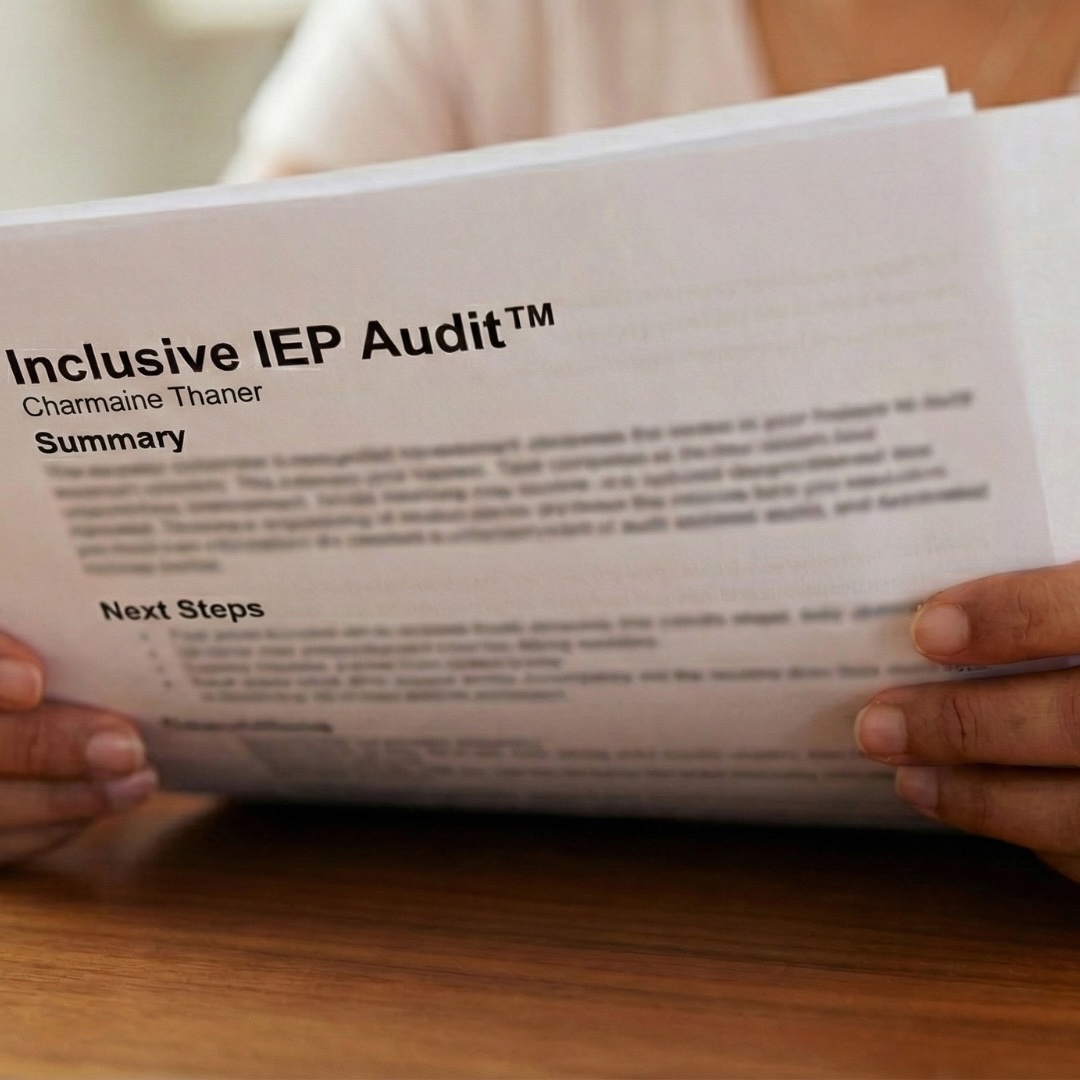
After our session you'll receive a written plan built to be used: a tool you can bring to your next IEP meeting.
It includes:
The biggest inclusion gaps we identified, so you know what matters most right now.
Key observations from the IEP sections we reviewed, so you can see what the document is really saying about your child's place in the classroom.
Patterns and missing links that may need attention, so you can see how the pieces connect, or why they aren't.
Specific language to bring to your next conversation with the school, so you can advocate clearly without having to find the words in the moment.
Three clear next steps, so you know exactly where to start.
What Parents Are Saying
What You Get and What It Costs
The Inclusive IEP Audit™ is not a full review of the IEP.
It is a focused audit of the sections that determine whether inclusion happens, because those are the ones that shape your child's day, their relationships, and whether they feel like they truly belong.
For $397, here's everything included:
✔ Pre-session IEP review, so our time together starts focused on your child
✔ A private 90-minute Zoom session, where we walk through the sections that shape inclusion together, in real time
✔ Guidance specific to your child's IEP and school situation, so nothing we cover is theoretical, it is all about your child
✔ Full recording and transcript, so everything we uncovered together stays with you long after the session ends
✔ Your written Inclusion Next Steps Plan, so you leave with a clear path forward.
★★★ BONUS: This Is Me!™ ($97 value) A custom-built AI tool that transforms everything you know about your child into a strengths-based learner profile, ready to use in any AI tool and as copy-ready language for key IEP sections. Because your child isn't generic, and neither should the tools you use to fight for them.
All for $397.
The Inclusive IEP Audit™ Clarity Guarantee:
If anything in your plan is unclear, reach out within seven days and you'll get one complimentary 30-minute call to go over the findings and next steps. I can't guarantee how the school will respond, but I can guarantee you won't be left wondering what to do next.
FAQs
Is this worth it if I can just read the IEP myself?
You've probably read your child's IEP many times and still wonder what it means for your child's day.
That's a design problem.
Generic language and loopholes are easy to miss when you don't know what to look for.
I've written IEPs, signed one for my own child, and spent years helping parents change them.
I know where inclusion breaks down in an IEP, and where it was never written in to begin with.
That's what I'm looking for, so that your child gets an IEP that reflects where they belong, not what the school has always done.
How do I know you'll understand my child's situation?
Before we meet, you'll fill out a short intake form so I understand more about your child, your inclusion concerns, and what's feeling hard right now.
That way the advice is about your child, because I'm reading their IEP with your real concerns in mind.
And I'm coming to this as a retired teacher, professional advocate, and parent.
My son, Dylan, has Down syndrome. I know what it feels like when the people across the table read a laundry list of what your child can't do, and tell you they "aren't ready" to be included.
When I read your child's IEP, I'm reading it as someone who has written them, lived them, and fought to change them.
Our IEP meeting already happened. Is it too late?
It's never too late.
Right after a meeting is one of the best times to do this. Everything is fresh, you're still processing what happened, what surprised you, and what you wish you'd said.
The Inclusive IEP Audit™ helps you figure out what the IEP is actually saying now that the meeting is over, and what to ask for next.
And here's what you may not realize: the IEP is a living document. You can request a meeting to amend it at any time. You don't have to wait until next year.
What if this makes things worse with the school?
Your fear is real, and schools count on it. Fear of retaliation is one of the most effective ways to keep parents quiet.
What changes that is knowing your rights. Knowing your rights means you stop making decisions from fear and start making them based on what your child needs.
I can't promise the school will make it easy. What I can tell you is that knowing your child's rights is one of the few things the school can't take off the table, and it changes what you're able to ask for.
I've tried getting help before and nothing changed. Why would this be different?
You've been burned before. You got help, nothing shifted, and your child is still in the same place. Of course, you're wondering whether this is worth it. That makes complete sense.
Here's what's different. Most IEP reviews tell you what the document says and what's missing. The Inclusive IEP Audit™ asks a different question: Is inclusion built into your child's IEP from page one?
I spent years in both general and special education classrooms, including students. I know what language gets used to quietly limit a child's inclusion, and what a genuinely inclusive IEP looks like on paper.
I'm also a parent. My son has Down syndrome. This is something I live..
Most IEP reviews check for compliance.
Your Inclusive IEP Audit™ checks for inclusion, so your child's IEP is written to open doors and keep them learning beside classmates in general education.
That's the difference.
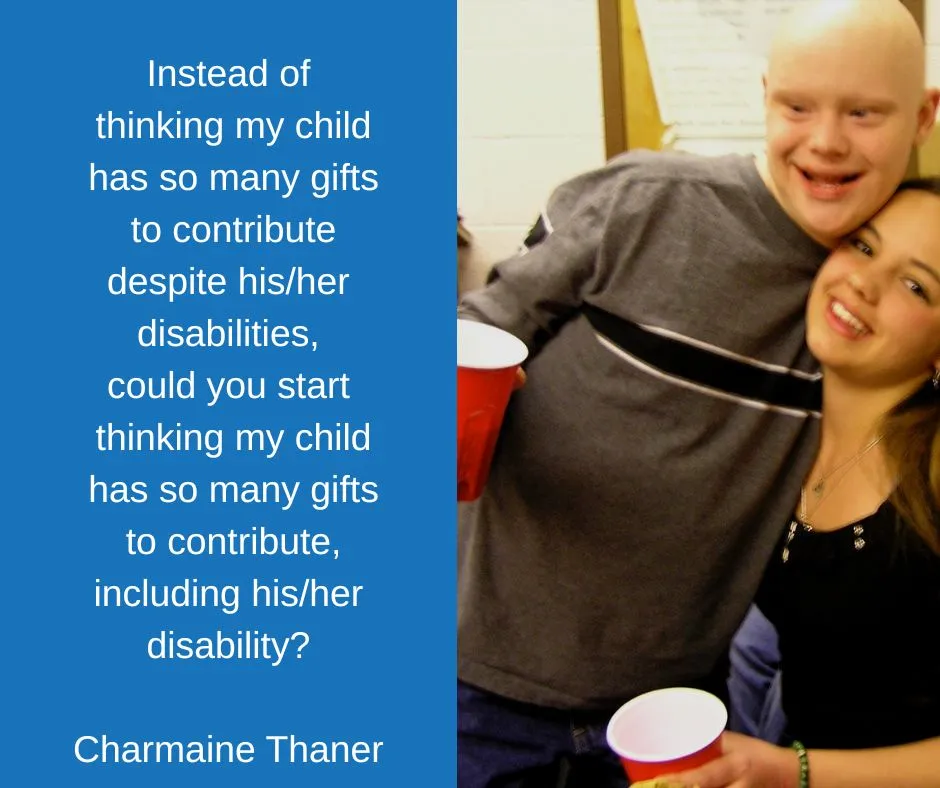
This Is What Your Child Deserves
And What You're Advocating For.
Your child experiences real inclusion, not just a seat in the room.
They are safe, respected, and treated with dignity, not punished for being different.
They’re met with high expectations and real learning, not watered-down work.
Supports are clear, consistent, and accountable, not vague or conditional.
They're surrounded by adults who believe in their capacity.
You don't have to carry this alone.
The Inclusive IEP Audit™ is one clear step toward an IEP that finally works for your child.